Tracing Deposit Sequences to Predict Switches Between Reel and Card Platforms for Ranked Participants
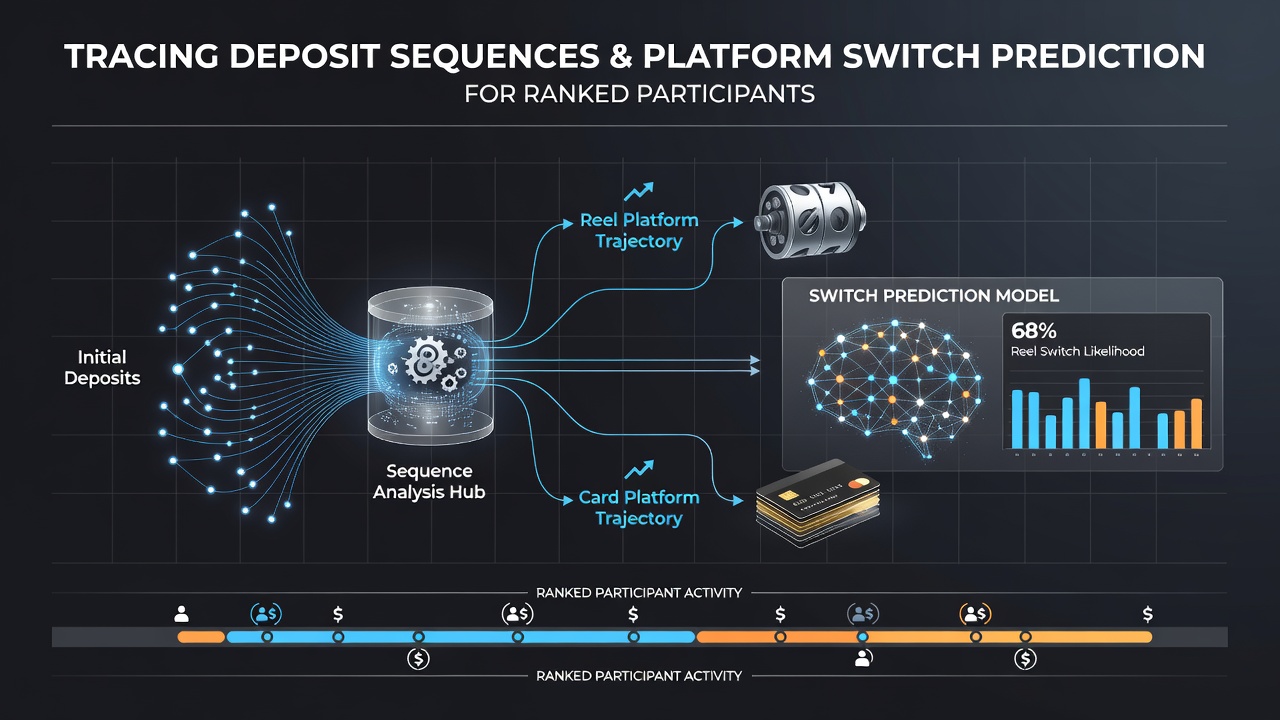
Deposit sequences offer clear indicators for how ranked participants move between reel platforms and card environments in integrated casino systems, and analysts track these patterns through timestamped transaction logs that capture amounts, frequencies, and platform selections over defined periods. Ranked participants often maintain consistent deposit rhythms before shifting focus, so operators monitor these trails to anticipate transitions from slot reels to table card games such as blackjack or baccarat.
Understanding Deposit Sequence Analysis
Operators collect raw transaction data from loyalty program databases and payment processors, then apply sequence mining techniques to identify clusters where deposit sizes increase or decrease ahead of platform switches, and this process reveals correlations between initial reel-based deposits and later card game entries among tiered players. Data from multiple jurisdictions shows that participants in higher loyalty tiers exhibit more predictable sequences because their activity volumes generate denser records for pattern recognition.
Those who study player behavior note that a typical sequence might begin with several small deposits on reel platforms during evening hours, followed by a larger single deposit on card platforms within forty-eight hours, and this progression appears across datasets from regulated markets. Sequence algorithms flag these progressions by comparing current activity against historical profiles for each ranked account, which allows systems to generate switch probability scores in real time.
Platform Switch Prediction Models
Prediction models integrate deposit timing with game-type metadata to forecast when a participant will migrate from reels to cards, and these models weigh factors such as average deposit intervals, cumulative amounts, and prior crossover events recorded in the same loyalty tier. Research indicates that models trained on six months of transaction data achieve higher accuracy for top-tier participants because their sequences contain fewer random variations than those of lower-ranked accounts.
One dataset compiled through June 2026 highlighted that ranked players who deposit three times within a seventy-two-hour window on reel platforms show a sixty-two percent likelihood of initiating card game activity within the subsequent four days, and operators use this threshold to adjust promotional triggers accordingly. The models also account for external variables like tournament schedules that influence card platform traffic, which refines the timing estimates further.
Ranked Participant Behaviors Across Platforms
Ranked participants display distinct deposit signatures when preparing to switch platforms, whereas casual players produce noisier patterns that resist reliable forecasting, and this distinction drives the focus on tiered analytics in current casino systems. Observers note that gold and platinum tier members often consolidate deposits into larger amounts before card sessions, while reel activity tends toward repeated smaller increments that build session length.
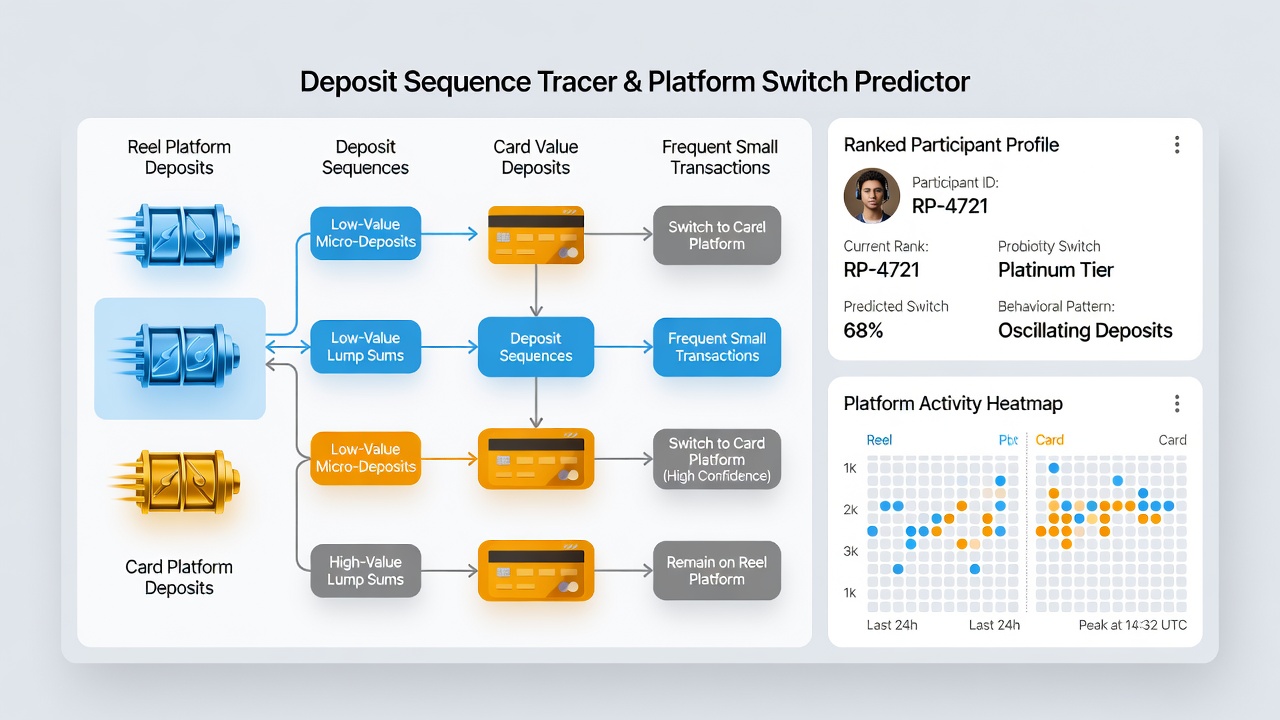
Transaction logs from integrated platforms demonstrate that participants who maintain a reel-to-card deposit ratio above 3:1 over a two-week span frequently reverse that ratio during the following week, and these reversals coincide with measurable increases in table game handle. Systems flag such ratio shifts automatically, which enables operators to prepare platform-specific incentives without manual review of every account.
Data Sources and Regulatory Context
Regulatory filings from the New Jersey Division of Gaming Enforcement provide aggregated transaction summaries that support sequence analysis research, and these summaries detail how operators report platform-specific volumes for loyalty program participants. Industry reports from the American Gaming Association further contextualize these findings by showing that cross-platform activity among ranked players accounts for an increasing share of total handle in multi-game environments.
Academic studies published through university research centers examine how deposit sequence length correlates with switch accuracy, and one analysis of anonymized records found that sequences spanning at least five deposits yield the strongest predictive signals for card platform entry. These studies emphasize the value of continuous data streams rather than periodic snapshots when modeling ranked participant movement.
Implementation in Casino Operations
Casino technology teams embed sequence detection modules into existing player management platforms so that alerts surface when a ranked account exhibits deposit patterns associated with upcoming switches, and staff then review these alerts alongside live game availability to optimize floor or digital resource allocation. Integration with real-time payment gateways allows the system to capture deposit metadata within seconds of authorization, which keeps prediction windows narrow enough for practical use.
Operators test these implementations across multiple properties to verify consistency, and results show that sequence-based predictions reduce response lag compared with models that rely solely on game-type session counts. The approach also supports responsible gaming protocols by identifying rapid deposit escalations that precede platform switches, which can trigger automated limit checks for affected accounts.
Conclusion
Tracing deposit sequences supplies operators with measurable signals for anticipating platform switches among ranked participants, and the combination of timestamp analysis, ratio tracking, and tier-specific modeling produces actionable forecasts that integrate directly into daily operations. Continued refinement of these methods depends on access to high-resolution transaction data across reel and card environments, which regulatory frameworks in multiple jurisdictions now facilitate through standardized reporting requirements.