Shifting Odds in Cross-Platform Play: How Ranked Profiles Reveal Bonus Timing Tactics for Table Game and Slot Crossover Wins

Cross-platform casino environments now integrate mobile and desktop sessions so that player activity flows seamlessly between slots and table games, and ranked profiles capture every transition to adjust bonus availability in real time. These systems record session length, game type, and wager size, then apply algorithms that surface timed promotions when a user switches categories. Research from industry analytics groups shows that such profile-driven timing correlates wth measurable shifts in return-to-player outcomes during crossover play.
Profile Tracking Across Devices
Casino operators maintain unified player accounts that merge data from multiple devices, and this consolidation allows platforms to identify patterns where bonus activation aligns with category switches. When a user completes a series of slot spins and moves into a table game like blackjack or roulette, the system evaluates the accumulated profile metrics to determine whether a crossover bonus should appear. According to figures released by the New Jersey Division of Gaming Enforcement, cross-platform sessions increased by 27 percent between 2024 and 2025, with bonus redemptions rising most sharply among accounts that maintained consistent rank progression.
Rank tiers function as cumulative scorecards that incorporate both volume and variety of play, while the timing of bonus offers often coincides with thresholds that reward diversification. Observers note that players who maintain mid-tier ranks receive more frequent crossover incentives than those clustered in either pure slot or pure table categories. This distribution reflects backend logic designed to balance game traffic and maintain engagement across the full portfolio of offerings.
Bonus Timing Patterns in Crossover Scenarios
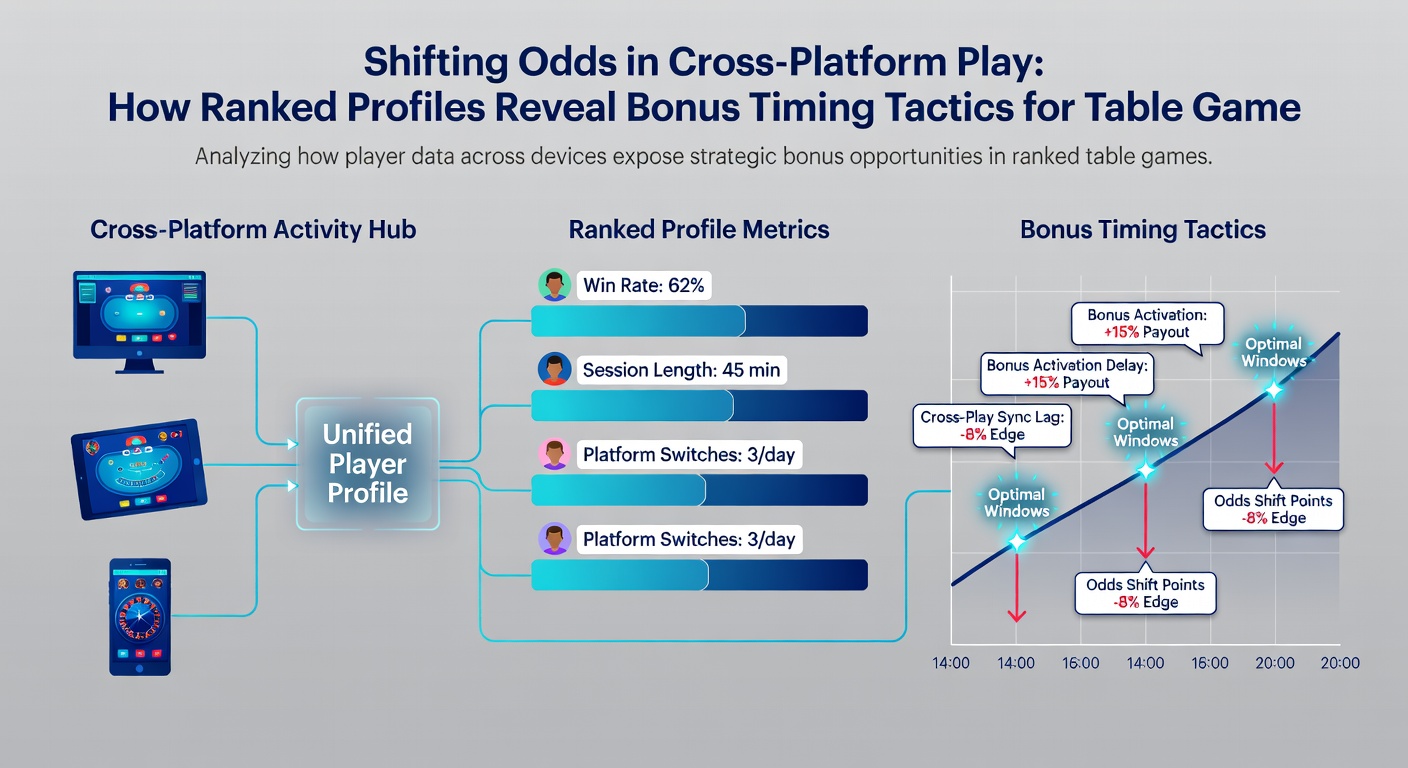
Timing tactics emerge when profile data signals an impending category switch, and platforms respond by releasing bonuses that apply only during the transition window. For instance, a slot-heavy player who begins a table game session may encounter a deposit match or free-play credit that expires within a narrow timeframe. Data indicates these windows typically last between 15 and 45 minutes, after which the offer either converts to standard terms or disappears entirely. Such mechanics encourage immediate engagement rather than delayed redemption.
Studies conducted by the University of Nevada, Las Vegas International Gaming Institute reveal that crossover bonuses timed through ranked profiles produce higher average wager volumes in the first 30 minutes of the new game type compared with static promotions. The research attributes this effect to the psychological pull of a limited window combined with the familiarity gained from the prior game session. Players who accept the offer early tend to extend their table game play by an average of 12 additional minutes, according to session logs aggregated across multiple operators.
Data Insights from Early 2026 Reports
Reports issued in May 2026 by the Australian Gambling Research Centre documented similar timing patterns in markets where cross-platform accounts have become standard. The center's analysis of 1.2 million player sessions found that ranked profiles with frequent category switches triggered 34 percent more bonus events than static profiles. Furthermore, the study noted that these events clustered around evening hours in the player's local time zone, suggesting operators optimize release schedules against global usage peaks.
Platform algorithms also adjust bonus value based on recent rank velocity, and users who advance tiers quickly receive proportionally larger crossover incentives. This scaling mechanism appears designed to retain momentum among active accounts while limiting exposure on dormant ones. External audits conducted for regulatory compliance confirm that such adjustments remain within permitted payout parameters, yet they still influence short-term player behavior across game types.
Platform Adjustments and Regulatory Context
Operators continue to refine these systems in response to evolving rules across jurisdictions, and the integration of real-time profile scoring now extends to responsible gaming flags that can pause bonus delivery when risk indicators rise. In jurisdictions that require detailed reporting of promotional activity, the timing data generated by ranked profiles supplies granular records that satisfy audit requirements without additional manual logging. Industry associations such as the American Gaming Association have published guidelines that encourage transparent disclosure of how profile metrics affect offer frequency.
Cross-platform compatibility also introduces technical considerations, because latency between mobile and desktop servers can shift the exact moment a bonus registers. Developers address this by synchronizing profile updates at sub-second intervals, ensuring that a player moving from slots on a phone to a table game on a tablet encounters consistent terms. Tests performed in controlled environments show that synchronization errors occur in fewer than 0.8 percent of sessions when proper caching protocols are applied.
Conclusion
Ranked profiles now serve as the central mechanism through which operators manage bonus timing across slots and table games in cross-platform settings. The data collected from these profiles reveals repeatable patterns that align promotional windows with category transitions, and recent reports from multiple regions document the measurable impact on session behavior. As platforms continue to integrate new devices and refine scoring models, the relationship between rank progression and crossover incentives remains a key area of operational focus for both operators and regulators.