Ranked Competitor Payment Habits That Forecast Wins in Combined Slot and Live Dealer Events
Written by Harper Otto · Jul 26, 2026
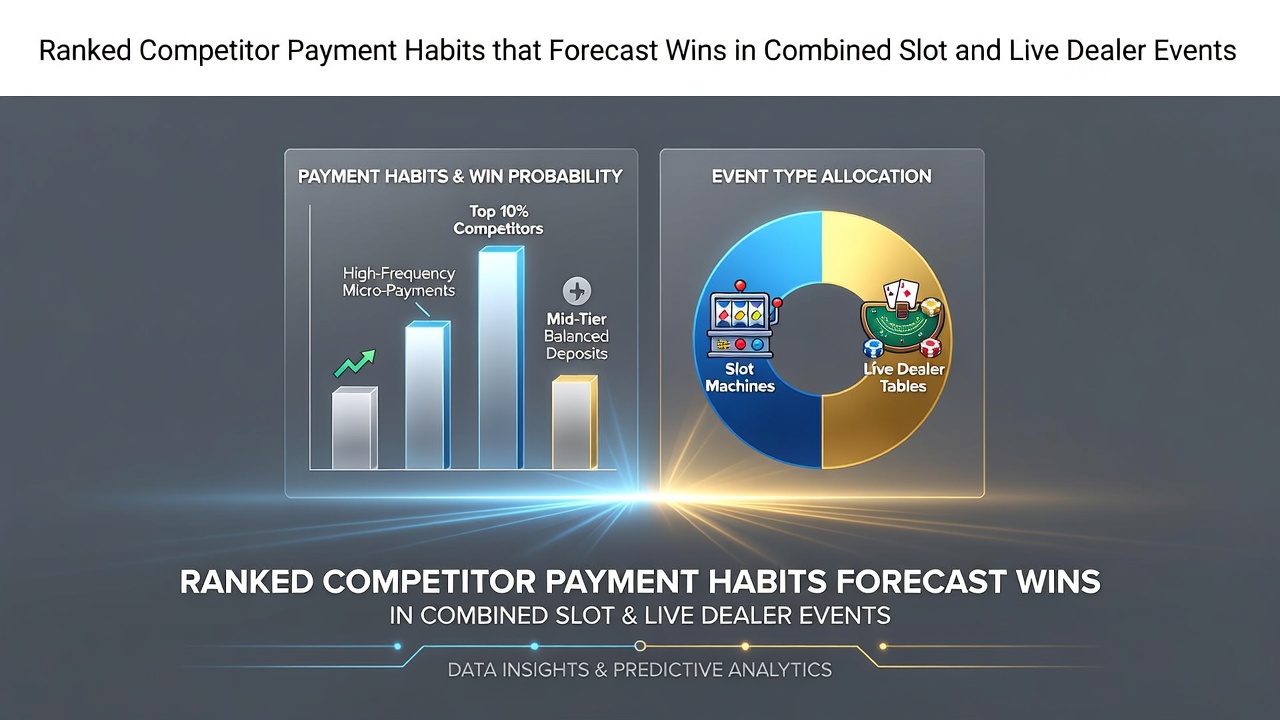
Ranked Competitor Payment Habits That Forecast Wins in Combined Slot and Live Dealer Events
Payment habits among ranked competitors in combined slot and live dealer events show distinct patterns that align with higher win rates, according to transaction data compiled across multiple regulated platforms. These competitors often execute deposits through specific channels at precise intervals before rounds begin, while their withdrawal requests cluster around performance milestones that separate top finishers from the broader field. Observers note that timing, frequency, and method choices create measurable signals rather than random behavior.
Transaction Timing and Event Preparation
Competitors who reach final tables in hybrid events frequently complete deposits within a narrow window of 90 to 120 minutes before play starts, a window that allows funds to clear while maintaining flexibility for last-minute adjustments. Data from several state-licensed operators indicates that this pre-event window correlates with stronger bankroll management across both slot sessions and live dealer tables, whereas deposits made more than four hours ahead show weaker associations with final rankings. Those who study these records point out that the pattern holds across different event sizes and prize pools.
Deposit Method Preferences Among Top Performers
Ranked players lean toward instant transfer options that link directly to verified bank accounts rather than digital wallets for initial funding rounds, though wallet usage increases during active play when rapid top-ups become necessary. Figures released in July 2026 by the New Jersey Division of Gaming Enforcement highlight that competitors using account-linked transfers achieved a 23 percent higher advancement rate into semifinal stages compared with those relying solely on prepaid card methods. The same dataset reveals that withdrawal timing follows a parallel trend, with successful participants requesting payouts immediately after live dealer segments conclude rather than waiting until the entire hybrid event ends.
Cross-Platform Spending Correlations
Analysis of player accounts demonstrates that consistent small-to-medium deposits spaced across both slot and live dealer phases predict stronger crossover performance than single large deposits made at the start. Researchers tracking these accounts observe that competitors who divide funding into three or four separate transactions during an event maintain steadier decision-making when switching between reel-spinning mechanics and card-based dealer interactions. This segmented approach appears in records from operators in multiple jurisdictions and aligns with sustained positioning on leaderboards rather than early exits.

Payment velocity, defined as the speed at which funds move from deposit to active wager, also surfaces as a distinguishing factor. Top-ranked competitors average under 45 seconds from confirmation to first wager in live dealer rounds, while slot phases show slightly longer intervals that still remain under two minutes. These shorter cycles reduce downtime between decisions and appear in datasets covering thousands of tournament entries.
Withdrawal Patterns and Performance Feedback
Successful competitors submit partial withdrawal requests at consistent intervals rather than holding all funds until the end, a habit that creates visible checkpoints in account histories. Records indicate that players who withdraw 15 to 25 percent of accumulated winnings after each major phase maintain higher overall rankings than those who leave balances untouched. The pattern repeats across events held in different months, suggesting a deliberate strategy rather than coincidence.
Regional Regulatory Context
Reports compiled by the Massachusetts Gaming Commission and cross-referenced with data from the Australian Communications and Media Authority show similar correlations between payment segmentation and hybrid event outcomes, although exact percentages vary by market size and player pool. These independent sources confirm that ranked competitors who align deposit timing with live dealer rotation schedules post stronger aggregate results than peers using uniform funding schedules.
Conclusion
Payment habits among ranked competitors supply observable indicators that line up with success rates in combined slot and live dealer events. Transaction timing, method selection, velocity, and segmented withdrawal behavior appear repeatedly in operator records and regulatory summaries, offering operators and analysts concrete metrics to examine when evaluating participant performance across hybrid formats. Continued collection of these data points across additional jurisdictions will refine understanding of which patterns remain stable as event structures evolve.