Participant trajectory mapping across virtual interfaces reveals timing patterns for incentive delivery in blended entertainment ecosystems.
Written by Katja Krüger · Aug 2, 2026
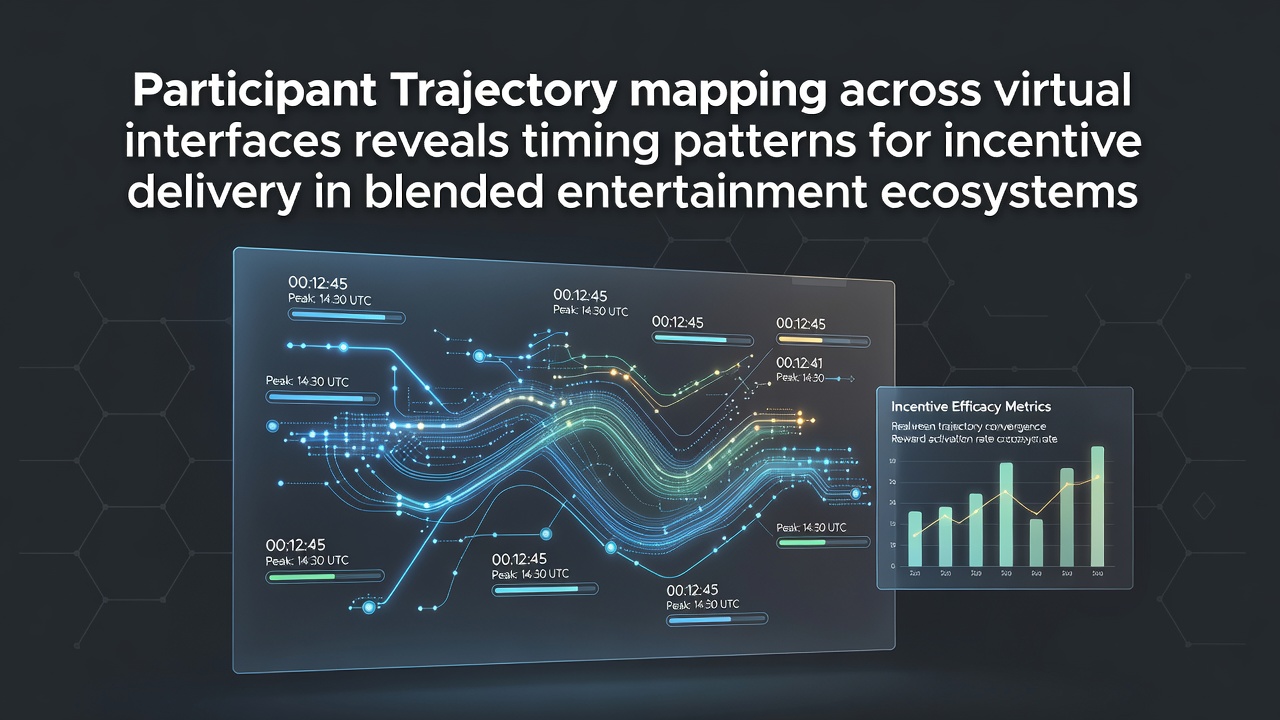
Participant trajectory mapping across virtual interfaces reveals timing patterns for incentive delivery in blended entertainment ecosystems.
Analysts track participant movements through layered virtual environments where multiple platforms intersect, and data streams from these paths highlight consistent intervals when users respond to delivered incentives such as content unlocks or progression rewards. Blended entertainment ecosystems combine virtual reality sessions with augmented overlays and live event integrations, creating continuous flows that researchers map in detail to identify optimal delivery windows.
Mapping Movement Across Virtual Interfaces
Trajectory mapping records sequences of user actions as individuals shift between digital spaces, whether navigating a virtual concert stage or transitioning from an interactive narrative module into a collaborative world-building area. Sensors and platform logs capture position, dwell time, and interaction frequency, allowing systems to build profiles that predict when engagement peaks occur. Observers note that these records often show repeated patterns where participants pause at decision nodes before advancing, which aligns with moments when tailored incentives produce measurable uptake.
Platforms operating in August 2026 continue to refine these models by incorporating real-time adjustments based on aggregated path data. One study from a European research consortium demonstrated that mapping tools reduced latency between user milestones and reward presentation by correlating spatial behaviors with historical response rates across sessions.
Timing Patterns for Incentive Delivery
Evidence from platform analytics indicates that incentives arrive most effectively when users complete a defined segment of their trajectory, such as finishing a collaborative task or reaching a spatial threshold in a mixed-reality zone. These patterns emerge because participants tend to exhibit heightened receptivity after sustained activity periods, rather than during initial entry or rapid exits. Data collected through August 2026 shows clusters of successful deliveries clustered around the 12-to-18-minute mark in many session types, though durations vary by ecosystem complexity.
Blended environments add layers because users frequently alternate between fully virtual and augmented physical spaces, which alters the timing windows. Researchers discovered that cross-interface transitions create brief attention resets, making subsequent incentive prompts more noticeable when synchronized with these shifts. Systems now adjust delivery schedules dynamically, using trajectory velocity as a trigger variable to avoid overlap with high-distraction phases.
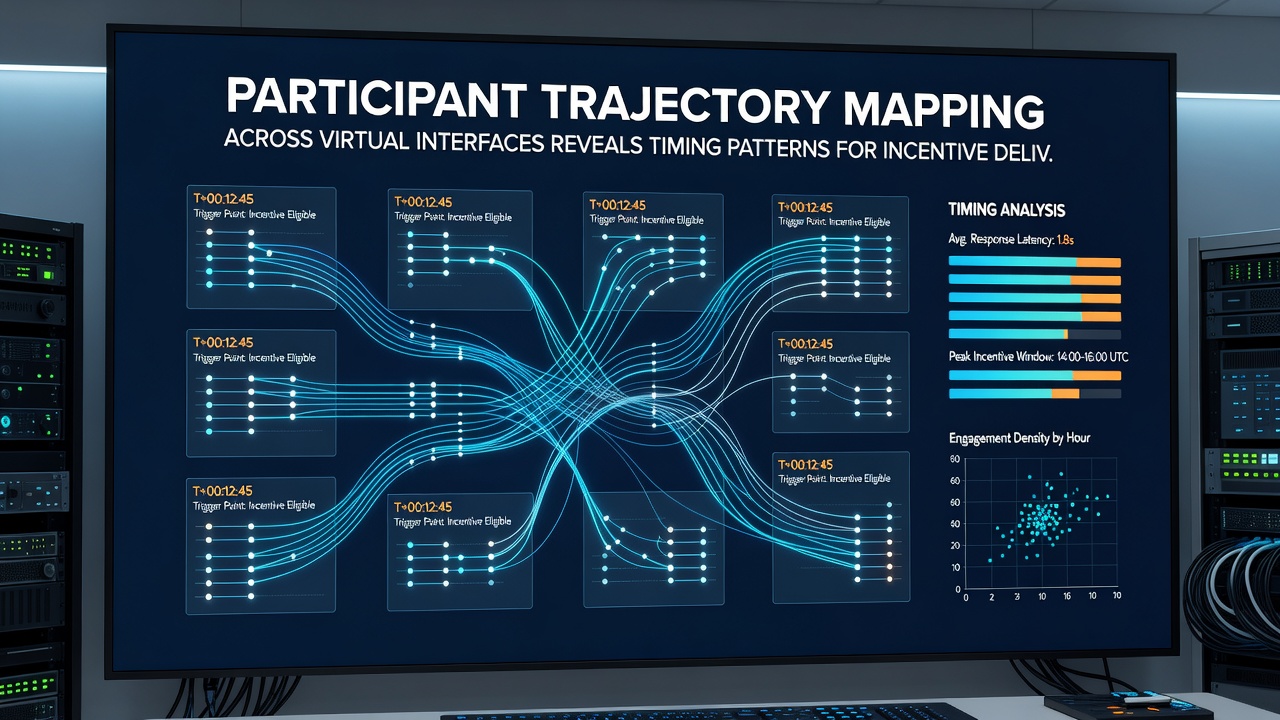
Integration in Blended Entertainment Ecosystems
Blended ecosystems merge digital interfaces with physical participation points, and trajectory data helps coordinate incentives across these boundaries. For instance, a user who moves from a virtual exploration module into an on-site event activation receives prompts timed to their physical arrival, based on prior virtual path analysis. According to findings published by the Australian Communications and Media Authority, such synchronized approaches maintain continuity while respecting regional data standards for participant tracking.
Industry reports further reveal that operators segment trajectories into micro-phases to refine delivery precision. Short dwell periods in transitional zones often precede strong responses to social or progression-based rewards, while longer explorations correlate with content-expansion incentives. These distinctions allow platforms to allocate resources more efficiently without disrupting user flow.
Data Sources and Analytical Approaches
Multiple organizations contribute datasets that support trajectory analysis. Academic groups in Canada and Asia supply longitudinal studies that compare single-interface versus multi-platform behaviors, showing how crossovers influence incentive timing effectiveness. The Canadian Radio-television and Telecommunications Commission has released summaries of digital entertainment metrics that include engagement intervals relevant to blended systems.
Pattern recognition algorithms process these inputs to generate predictive schedules, and updates implemented by mid-2026 incorporated velocity and transition frequency as primary variables. Those who analyze the outputs observe that repeated testing across diverse user groups confirms the stability of core timing clusters while highlighting regional variations tied to cultural participation styles.
Conclusion
Participant trajectory mapping supplies concrete indicators for incentive timing within blended entertainment ecosystems by revealing repeatable sequences across virtual interfaces. Continued collection of path data through August 2026 and beyond supports refinements that align delivery with natural behavioral rhythms, sustaining engagement across combined digital and physical experiences.